


.png)

.png)
.png)
.png)
.svg)

What Is a Living Will?
A living will is a legal document that sets instructions for medical care when a person cannot speak for themselves. It applies during serious medical conditions such as terminal illness, permanent unconsciousness, or end-of-life care situations.
Unlike informal conversations with a family member or close friend, a living will provides written directions that medical providers can legally rely on. Arizona law formally recognizes living wills as advance directives under A.R.S. § 36-3201, giving medical providers legal clarity when a patient cannot speak for themselves.
A living will in Surprise may include directions about:
- Life support and artificial ventilation
- Pain management and comfort care
- Artificial nutrition and hydration
- End-of-life care preferences
This document applies only to medical decisions and does not control finances, property, or estate distribution.
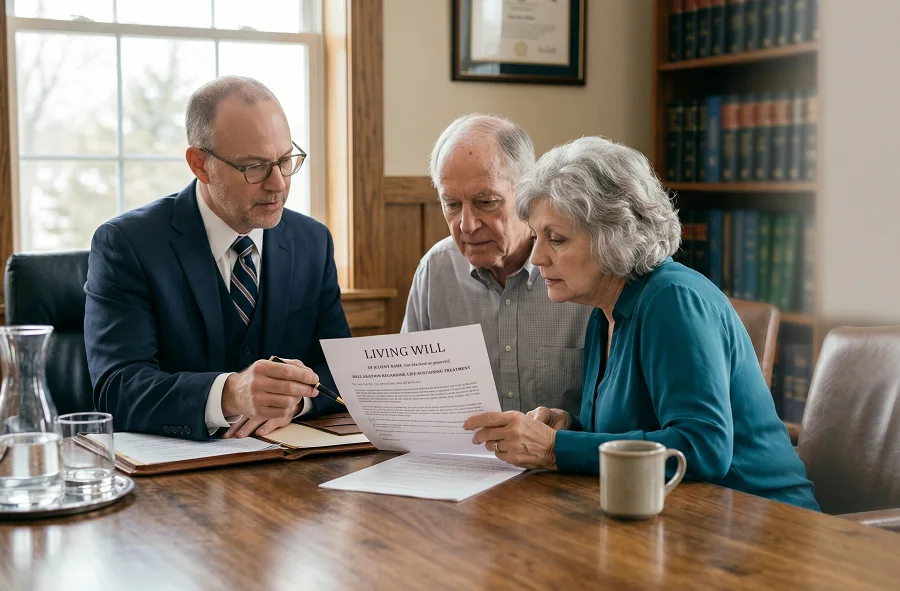
How a Living Will Compares to Other Documents
Estate planning documents often cause confusion because similar terms refer to different legal functions. A living will, a normal will, and a power of attorney each control a separate part of a person’s affairs. While a living will provides instructions, A.R.S. § 36-3221 governs who has authority to act through a health care power of attorney.
Living Will vs. Last Will
A last will serves the same purpose as a normal will and applies only after death. It governs the probate process and directs how remaining assets pass to beneficiaries.
A living will does not affect probate, estate administration, or asset transfer. Its scope remains limited to medical decisions made during life.
Living Will vs. Power of Attorney
A living will provides written medical instructions. It tells medical providers which treatments to provide or withhold when communication is not possible.
A power of attorney grants legal authority to another person. For health care, it identifies who may make decisions, but it may not state how those decisions should occur. A living will supplies that direction.
How These Documents Work Together
Many people in Surprise use a living will with a healthcare power of attorney and a normal will. Each document addresses a different area of personal affairs: medical care, legal authority, and estate distribution.
Medical Decisions a Living Will Can Cover

A living will does not address every possible scenario, but it covers the most critical medical decisions that arise during severe illness or injury.
Common decisions addressed include:
- Whether life support should continue if recovery is unlikely
- Preferences for resuscitation or advanced medical care
- Instructions for comfort-focused treatment versus aggressive intervention
- Directions for medical providers when the prognosis is irreversible
Arizona law protects medical providers who rely on a valid living will in good faith, as outlined in A.R.S. § 36-3204. Without this document, Arizona law may leave decisions to family members who disagree or feel uncertain. A living will applies only after a physician determines that the individual can no longer make or communicate medical decisions.
_7XLG.webp)


.svg)
.png)

_4XLG.webp)







%20(1).png)
.svg)